

“I get 100 AI pitches in my inbox every single day. I want to see the proof that the technology is going to do something.”
If you have never been to JPM Week, it is hard to describe what the energy feels like. Thousands of people packed into the corridors of a few hotels in San Francisco, every conversation carrying a weight that most meetings do not have, because the outcomes of those conversations determine whether companies live or die, whether science gets funded or gets shelved, whether a researcher’s life work gets a chance or does not.
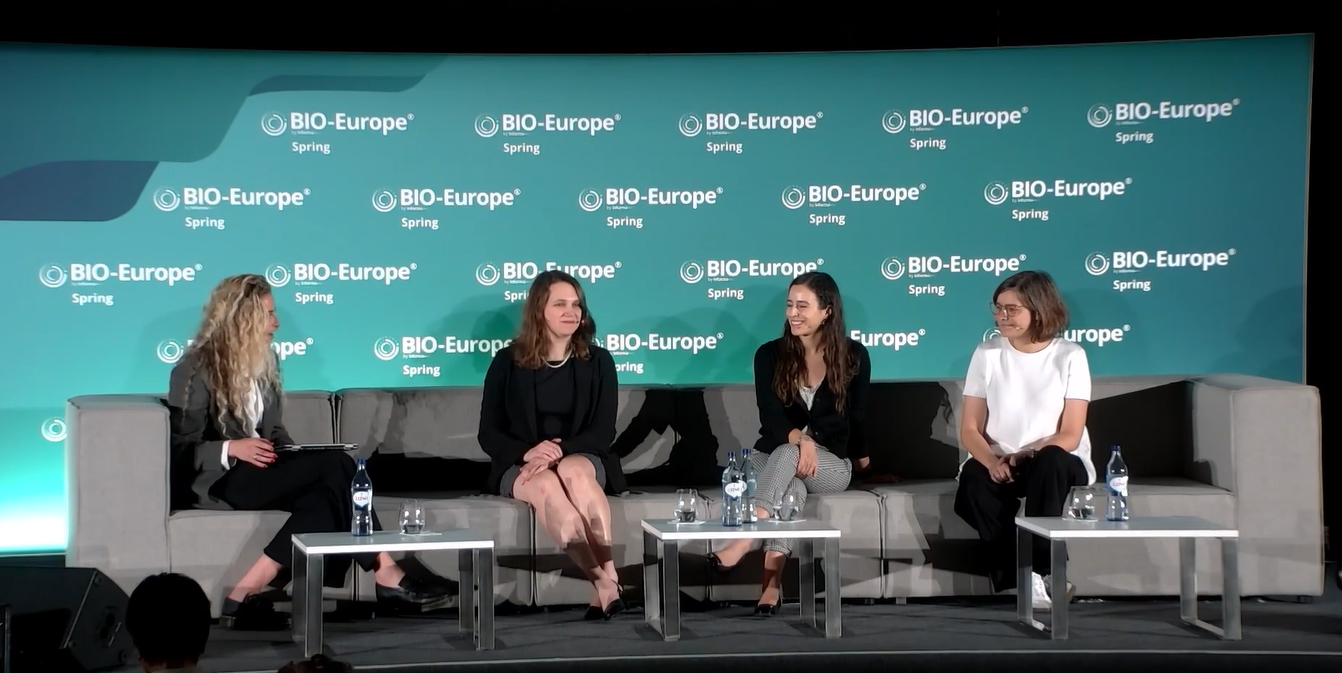
I was sitting in the back of a session at Biotech Showcase when an investor said that. The panel had been moving along carefully the way these things do, and then that sentence came out and just sat there.
A hundred pitches a day. Show me the proof.
I kept thinking about it for the rest of the week because it explained something I had been watching play out in room after room, and because I think most scientists who are building companies or thinking about building companies have no idea this conversation is happening. Here is what I saw.
Mistake 1: Leading with potential instead of proof
Here is what I watched happen repeatedly. A founder would walk an investor through their platform, the model architecture, the vision for compressing drug discovery timelines, and it would sound genuinely impressive. Then the investor would ask a simple question: what has your platform actually done in a program? And the answer would soften. A candidate in early preclinical. Some internal validation. Results we expect to share soon.
The investor would nod and the meeting would end, and nothing would happen.
If you are a scientist, you are probably trained to talk about potential. Your grant applications describe what the research could reveal. Your papers situate findings within what they might one day mean. That language makes sense in science because science is genuinely about what we do not yet know.
Investors are not interested in what the technology might do. They have heard that story a hundred times this week alone. What they are sitting there waiting for is one thing your model actually did, in one specific program, with data behind it. Not a vision. Not a roadmap. One thing that happened and can be pointed to.
The companies getting real traction at this conference were the ones who could do exactly that, and those conversations went somewhere completely different.
Mistake 2: Building a platform without an attached asset
A broad platform thesis sounds ambitious, but without a specific asset or program attached to it, investors have nothing to evaluate. The large rounds are still happening but they are going to fewer companies, and the question being asked over and over is what is clinical, what is close, and where does the return actually come from. If your pitch is built around what your technology could eventually enable rather than what it is actively doing in a program right now, you are answering a question nobody in that room is asking. I explored how this plays out in real time in Time, Money, and Survival in Biotech, which looks at how funding shapes who gets to keep going.
Mistake 3: Assuming the funding environment is the same for everyone
Someone said, almost in passing, that the bigger you are the happier you are, and it stuck with me because it was a more honest description of the funding environment than most of what I heard from the main stage. For larger companies with existing portfolios and partners in place, the mood was genuinely positive. Private financing is up, a few cancer-focused IPOs have done well, and there is real energy around deals. For early-stage scientists just starting to think about what it means to build something, the picture is more uneven. Walking into that environment without knowing the difference puts you at a real disadvantage.
Mistake 4: Treating the pitch as a science presentation
The instinct for most scientists is to explain the technology thoroughly, walk through the methodology, and let the quality of the work speak for itself. That approach works in a lab meeting. In a thirty-minute investor conversation at JPM Week, it uses up all the time before you get to the thing the investor actually needed to hear. The question is not how the model works. It is what the model has done. Those are very different conversations and they require very different preparation.
Mistake 5: Ignoring China as part of your development strategy
For a long time China has been discussed in these rooms mainly as a risk. The geopolitical tension, IP concerns, regulatory complexity. All of that is still real. But the conversation at this conference had moved past whether to engage and into how. Clinical trials there enroll faster, development costs are lower, and licensing between Chinese biotechs and Western acquirers has become a regular part of how deals get structured. The companies that started building relationships there several years ago have advantages that take time to develop, and the window to start is narrower than it looks. I wrote about this shift in more depth in China and the New Geography of Biotech Innovation if you want to go deeper.
Mistake 6: Treating policy as someone else’s problem
FDA reorganization, most-favored-nation drug pricing, uncertainty about what the regulatory landscape looks like in two years. These concerns ran underneath almost every conversation I had that week. Several people made the case that the industry has historically waited for something to go wrong before organizing a response, and that earlier and more coordinated engagement, with specific asks and real data, could shift outcomes that currently feel fixed. Most founders will not prioritize this until it lands directly on their program. Staying connected to the organizations already doing that work costs almost nothing.
Mistake 7: Not knowing this conversation is happening at all
This is the one that matters most for scientists who have not yet been in these rooms. The standards have shifted. The language investors are using has changed. What got funded three years ago on the strength of a compelling platform story is a harder conversation today. Most scientists building companies find this out in the room, when it is already too late to adjust. Knowing what the room expects before you walk into it is not a small advantage. It is the whole game.
What I left with
I have been to enough of these conferences now to know that most of what gets said on stage is careful and considered and does not tell you very much. The things that stay with me are usually smaller. A sentence from a panel. A conversation in a hallway that went somewhere unexpected.
“I get 100 AI pitches in my inbox every single day. I want to see the proof that the technology is going to do something.”
That stayed with me the entire week. One hundred pitches a day, and all she wanted was for one of them to show her something real.
If you are a scientist thinking about building a company, or already building one, that is worth sitting with. The work you are doing in the lab is real. The science matters. But the moment you step into these rooms, the question changes. It stops being about what you are capable of proving and becomes about what you have already proven, and what you can show someone in the next thirty minutes that will make them believe the next ten years are worth funding.
That gap is where most scientists get lost. And it is entirely possible to close it. You just have to know it is there first. If you want to go further on the AI side of this, Why Healthcare AI Is Failing to Deliver Breakthrough Results looks at why the integration problem runs even deeper than the pitch.


Leave a Reply