
There is a category of disease that medicine has struggled to address not because researchers stopped trying, but because the targets have been nearly impossible to reach with the tools we have had.
For decades, drug discovery has operated around a fundamental constraint: a drug needs somewhere to bind on its target protein, a pocket or groove that allows the molecule to attach and do its work. Many proteins have these features, and most approved drugs work by exploiting them. But some of the proteins most implicated in cancer, neurological disease, and other serious conditions do not offer that kind of foothold. Conventional chemistry has not been able to use them. The field calls these proteins undruggable, and it is a word that has quietly closed doors on a significant number of patients for a long time.
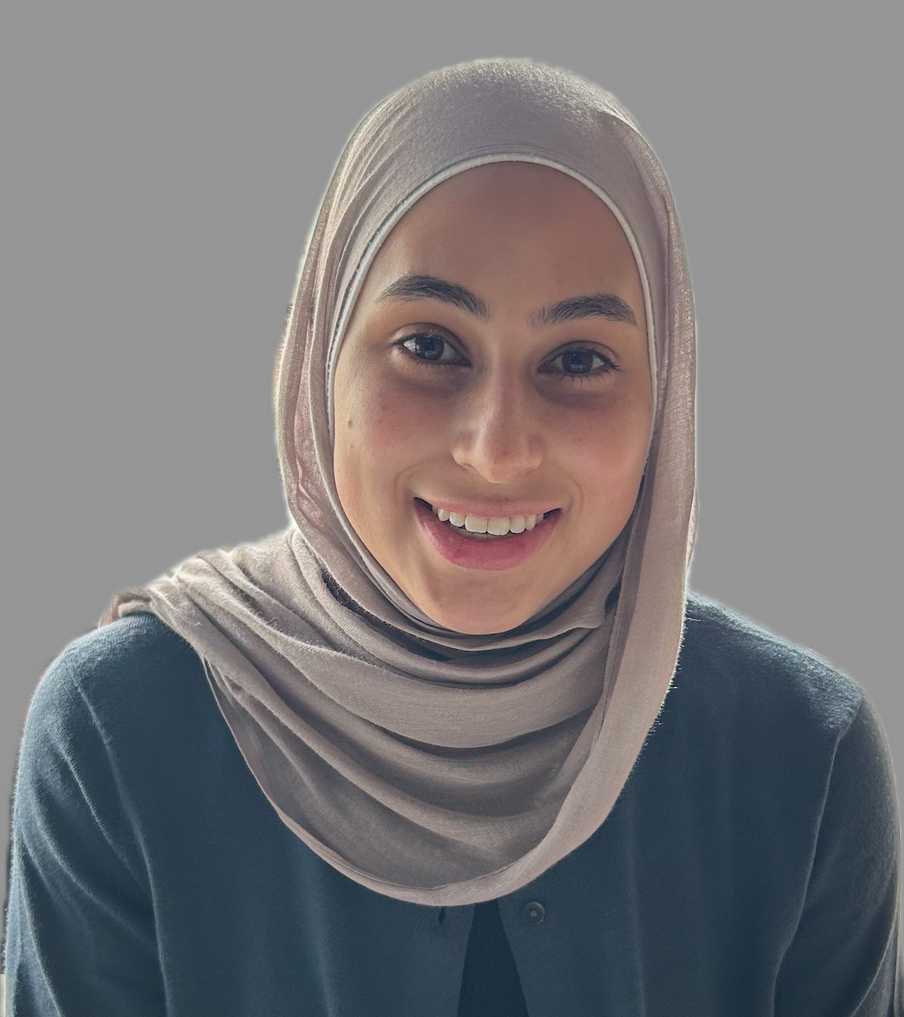
Ayah’s approach is to move one step earlier in the process. Rather than targeting the protein after it has already been made, Endura Therapeutics is developing a platform that targets the messenger RNA encoding it, the molecule that carries the genetic instructions for building the protein in the first place. If a small molecule can bind to that mRNA and interfere with those instructions before the protein is ever produced, it opens up a category of targets that conventional drugs simply cannot reach.
The idea of targeting RNA with small molecules is not entirely new, but what has been missing is a chemistry that can actually stick. Endura’s molecules are designed to form a permanent chemical bond with their RNA target — and it is precisely this covalency that unlocks two things at once: molecules potent, functional and durable enough to work inside living cells, and a fast, scalable way to screen many RNA targets and candidate molecules simultaneously using next-generation sequencing to map which combinations produce real effects. The platform received a Phase I grant from the NSF SBIR program in 2025, which represents meaningful external validation that the approach is worth pursuing and that the technical path is credible.
| For the scientist reading this → The undruggable protein problem is one of the most significant unsolved challenges in modern drug discovery, and it represents a genuine commercial and scientific opportunity for platforms that can address it in a new way. → Targeting mRNA with small molecules is an active and growing area of research. Several companies have moved programs into clinical trials, and major pharmaceutical partnerships have followed. Endura is building toward that same space at the platform level. → Next-generation sequencing as a screening tool is a meaningful methodological choice because it allows parallel testing across many targets and compounds at once, which is something traditional assay formats cannot do at the same scale. |
The Path That Built Her
The environment she trained in did not treat founding a company as a departure from science. It treated it as one of the things science could become.
Ayah did not arrive at entrepreneurship through a straight line. She arrived through a sequence of experiences that each added something the previous one could not have given her, and looking back at that path now, it reads almost like a deliberate curriculum for building exactly the kind of founder Endura needs.
It started in the lab. Her professor ran a research environment where spinning out companies was treated as a natural extension of good science, not a departure from it. That culture shaped how Ayah thought about the relationship between discovery and impact, and it opened a door she might not have known to look for otherwise. Her first step through it was into industry, working on early-stage drug discovery at a spinout, and the contrast with academia was clarifying in ways that are hard to fully appreciate without having experienced both. She saw how decisions get made when funding is finite, what it means to commit to a defined path rather than keep a project open-ended, and what it actually takes to move something toward a point where partners and investors will take it seriously.
From there, she moved into two experiences that shaped how she understands the investment side of the industry. A fellowship at a technology and life sciences venture firm gave her an early window into how investors think about the intersection of biology and capital. Then nearly a year inside a dedicated life sciences VC program gave her something more sustained: a real understanding of how firms evaluate companies, weigh risk across different modalities and markets, and decide what is worth backing at different stages. That kind of immersion is genuinely rare for a scientist, and it shows in how she talks about Endura’s development path now.
She then returned to the bench for a postdoctoral research position focused specifically on RNA-targeting small molecules, which is where the scientific foundation for Endura was built. A role at an AI-driven drug discovery company followed before she co-founded Endura in 2024 as Co-Founder and Head of Chemistry. The through line across all of it is someone who was building toward something specific, even before she could have named exactly what it was.
| For the scientist considering founding → Ayah’s path is a useful model not because it is replicable step for step, but because of the intentionality behind each transition. Industry experience, investor immersion, and deep scientific specialization were not accidents. They were the foundation. → The transition from exploring broadly to defining a lead is one of the hardest mindset shifts for scientist-founders, and industry exposure is one of the few things that genuinely accelerates it. Seeing how decisions get made when funding is finite changes your defaults in ways that are difficult to develop any other way. → If your training environment already normalizes entrepreneurship, that is a real advantage worth recognizing. If it does not, building connections outside your lab through founder communities, accelerator programs, or VC fellowship opportunities can create some of that same permission structure. |
Learning to See the Way Investors See
She did not learn what venture capital was by raising it. She learned it from the inside, spending nearly a year watching how a dedicated life sciences VC firm actually thinks.
The nearly eleven months Ayah spent inside a dedicated life sciences VC program gave her something that is genuinely rare among scientist-founders: a sustained, inside view of how an investment firm evaluates companies, constructs a portfolio, and makes decisions about risk. This was not a brief shadowing experience. It was long enough to see how the logic of investing plays out across different stages, different modalities, and different market contexts, and to develop a real intuition for the patterns that separate fundable science from science that is not yet ready to be built on.
What the experience made concrete was the investor’s fundamental question, which is not whether the science is good but whether the risk is understood and whether the path to reducing it is credible. Watching that question get applied across a portfolio of very different companies, across oncology and rare disease and platform plays and diagnostics, showed her how the same underlying logic works regardless of the specific technology. The question is always the same: what is uncertain, what would change our confidence, and what does a believable milestone look like from here.
She brought that frame back with her when she started building Endura, and it shapes how she thinks about the development path now. Which experiments matter most for reducing the central technical risk, what a credible proof of concept looks like to someone outside the lab, and how to tell the story of the platform in a way that connects scientific progress to a timeline an investor can actually evaluate. These are not instincts that come from the bench. They come from having sat inside the process long enough to understand it from the other side.
| For the scientist learning about venture capital → The fastest way to understand how investors think is to watch them work, through programs, cohorts, accelerators, or any context that puts you in the room rather than across the table from it. The logic of de-risking becomes concrete in a way that reading about it does not replicate. → Investors evaluate risk sequentially: is the problem real, is the science credible, is the path to a lead candidate defined, and does the team understand what they do not yet know? Being able to answer all four clearly is more valuable than having all four fully solved. → Government grants like NSF SBIR are an underused on-ramp. They fund a specific technical milestone, give you external validation, and give you something concrete to point to in investor conversations, all without diluting your equity. |
What Scientists Get Wrong About Selling Their Work
The science earns the right to be heard. But it is the story that determines whether anyone stays in the room long enough to care about the science.
Something that came up more than once in my conversation with Ayah, and that I have heard echoed by investors who spend time evaluating early-stage science companies, is how often brilliant researchers undersell themselves by leading with the wrong thing. It is not a confidence problem. Scientists generally believe deeply in their work. It is a sequencing problem, a tendency to begin with the mechanism before the audience has any reason to care about the outcome.
Technical depth is one of the most valuable things a scientist brings to a founding role, but front-loading it before establishing the problem can work against you. Investors are not following the assay design. They are asking whether this is a real problem, whether this person understands the path to solving it, and whether they are someone worth betting on.
Ayah is navigating this honestly. Precision and completeness have been her currency for years, and she is learning to balance them with clarity and vision. The scientists she has seen do this well have not abandoned rigour. They have learned to deploy it selectively, using technical detail to support a story rather than replace it. That is a learnable skill. Recognizing it needs to be learned is already most of the work.
| For the scientist who struggles to pitch → Start with the problem and why it matters before you introduce your solution. Investors need a reason to care about the answer before they can engage with how you arrived at it. → If you have a mentor or colleague who pitches well, pay close attention to how they sequence a story, what they choose to include and what they leave out, and how they handle technical questions without letting them take over the room. That observation is worth more than most formal training. → The ability to explain your work in two or three sentences that a thoughtful non-scientist finds genuinely interesting is not a simplification of your research. It is the opening of your pitch, and developing it is worth serious time and effort. |
What Stays With Me
I came into this conversation expecting to learn about RNA drug discovery, and I did. But what I am still thinking about, weeks later, goes beyond the science.
Ayah is a co-founder taking on a scientific problem that a significant portion of the industry has decided is too hard, and she is doing it at the earliest possible stage, with a small team, without the safety net of a large institution, in an ecosystem that does not always reward honesty about how early you are. She is also doing it while simultaneously drawing on years of deliberately accumulated experience, from the bench to the boardroom to the postdoc that gave her the science to build on. That requires holding a lot at once, and she is doing it with a groundedness that I found genuinely impressive.
What I appreciated most was that she did not present certainty she does not have. She talked about where the science still needs to go, about what the hard problems are, about what she is still figuring out. That kind of honesty is rarer than it should be, and it is exactly the quality that makes this story worth telling.
Between Talks exists to document stories like this one, not because they are finished, but because the people who most need to hear them are usually the ones still in the middle of their own. If you are a scientist sitting with an idea you have not yet given yourself permission to take seriously, I hope something in here helps you take that next step.
About Endura Therapeutics
Endura Therapeutics is an early-stage biotechnology startup founded by a team of expert drug hunters and inventors from Novartis, Stanford, and the University of Toronto. Fueled by a technology platform integrating chemistry, genomics, and AI, we are pioneering a new therapeutic approach to modulate RNA biology, and in doing so, unlock transformative treatments for today’s most challenging diseases. Still in stealth mode, Endura is supported by funding from top venture capital firms.


Leave a Reply